
By Master Brian McCann, Inner-Power Martial Arts, Howell, NJ
Last updated: November 2026
How Martial Arts Builds Confidence in Kids
Parents don't just want a busier after-school slot. They want a child who will try, speak up, and walk into a room with a little more certainty.
Martial arts can help, but not because a coach tells a child to "be confident." Confidence comes from doing something they couldn't do before, in a class small enough that an instructor actually coaches them. Kids often show more confidence within the first few weeks.
At Inner-Power Martial Arts, at 4244 US-9 in Howell, kids train Hapkido in Little Ninjas and Power Kids classes, with one instructor or assistant for every six kids. The best way to see if it's a fit is to start with two free intro classes. There's no payment, no card and no obligation to continue.
Book two free intro classes · or call (732) 886-5556
The short answer
Yes, martial arts can help a child build confidence, when they get to practice real skills with close coaching. It is not a switch that flips, and a quiet child does not need to become loud to be more sure of themselves. The school and the instructor matter as much as the style. Come see a class and watch how your child is coached.
Confidence comes from what a child can do
Being told "you're great" doesn't usually stick. What sticks is evidence a child can see for themselves: a stance, a pad kick they committed to, a partner drill they finished, speaking a little louder, looking the instructor in the eye.
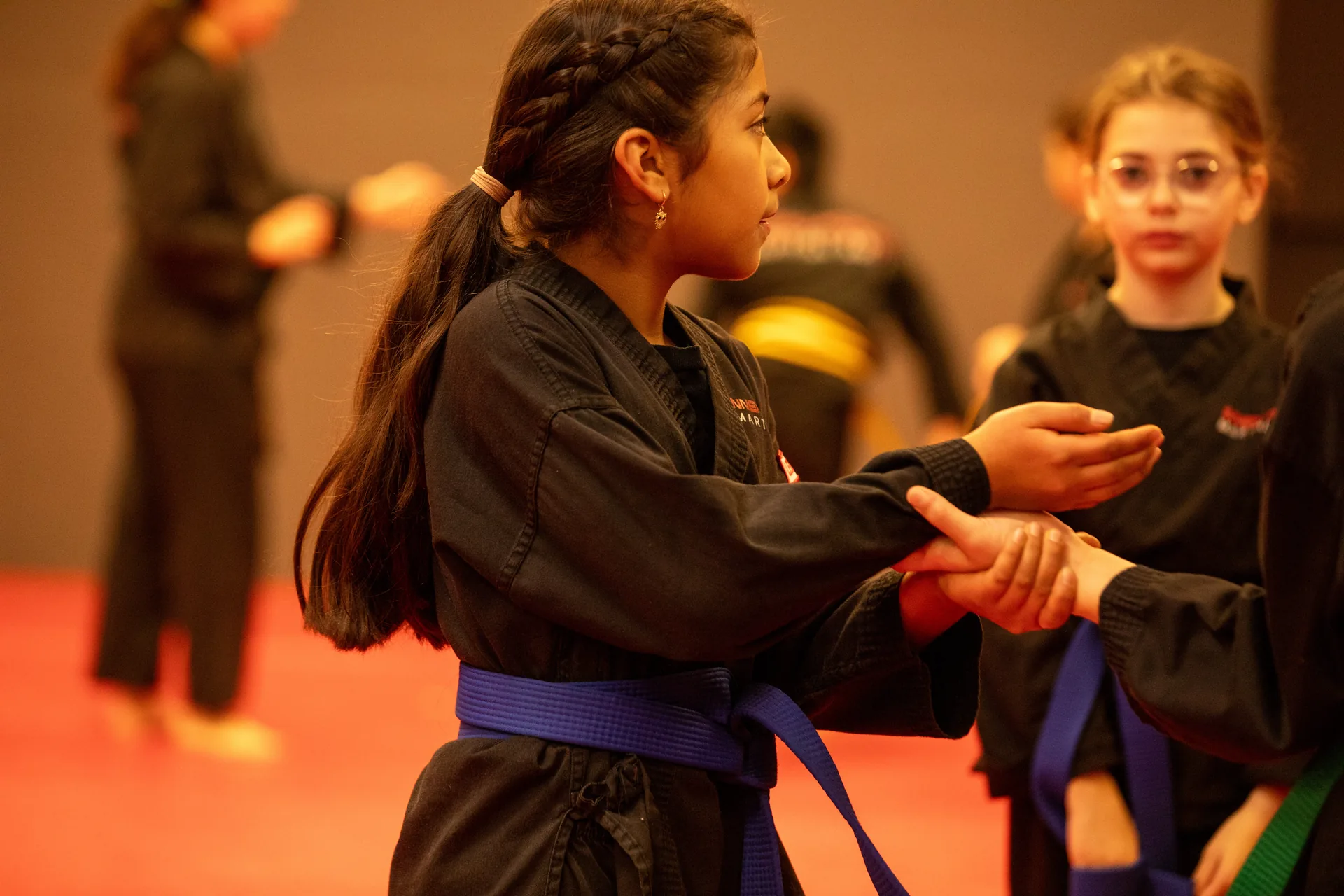
In our classes, that evidence comes from partner work and practical self-defense, not from forms. A child learns a grab escape, gets coached on their angle and their balance, and then does it again. Each time they succeed at something that used to be hard, they have a reason to trust themselves.
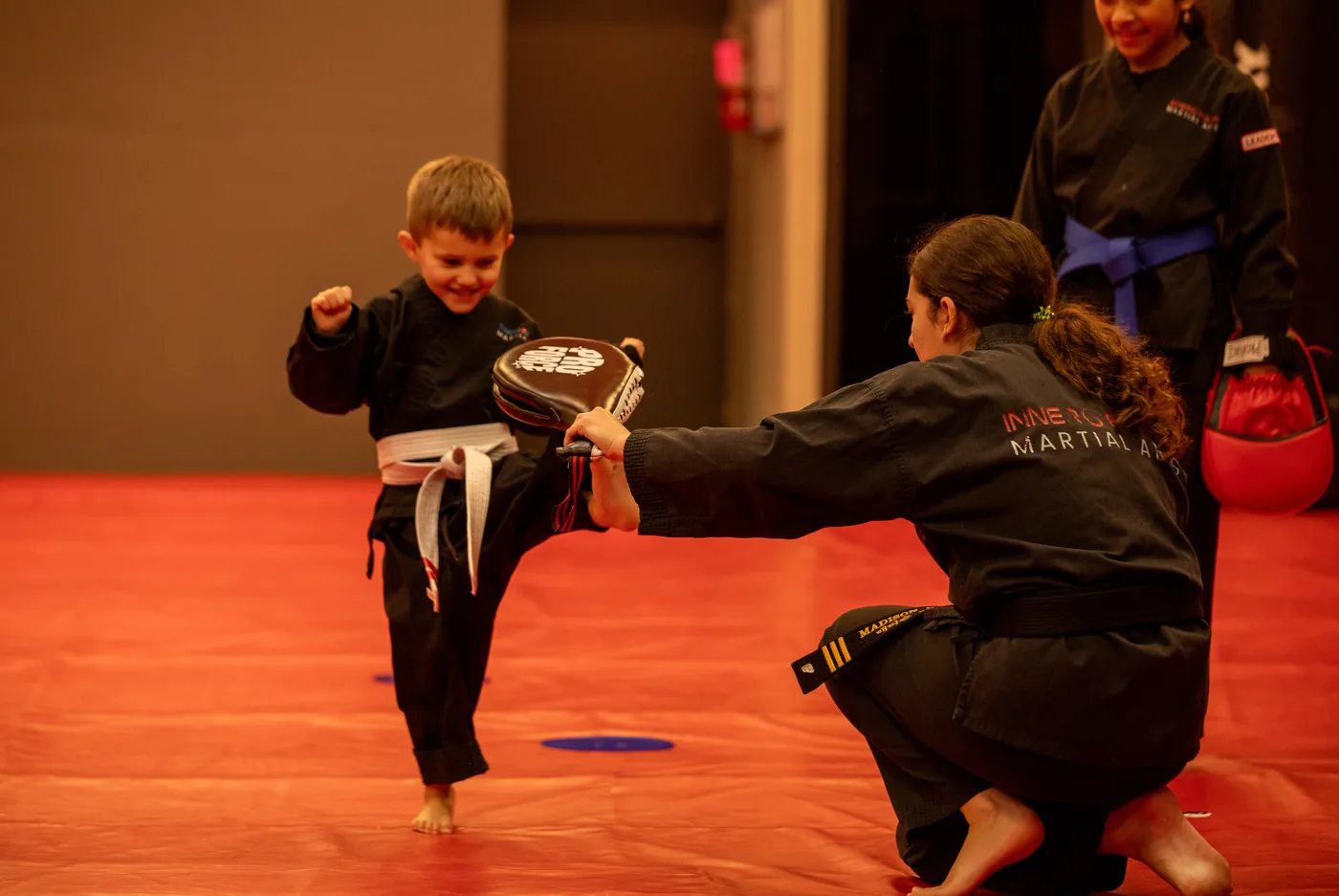
What happens in a Power Kids and Little Ninjas class
Our youngest students start in Little Ninjas (ages 4–5). Ready 3½-year-olds can be considered, with a readiness check during the intro classes. Power Kids is grouped by age, 6–7 and 8–12. For program details, see our kids program. Current times are on our schedule.
Kids classes keep one instructor or assistant for every six kids. That matters because partner work and practical self-defense need close coaching to be taught safely: how to stand, how much pressure to use, and how to fall.
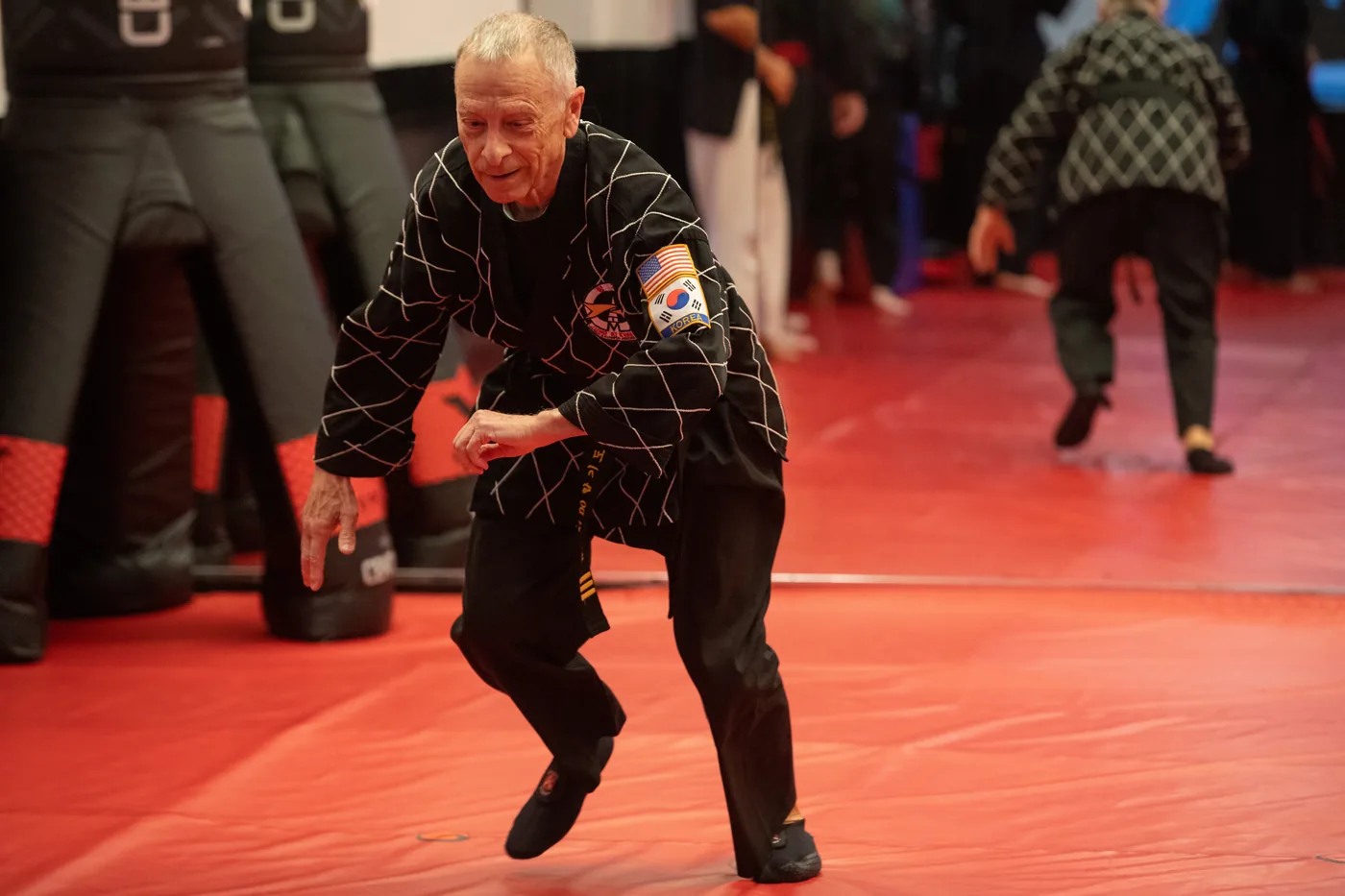
Children practice escapes, control, awareness, and when to get help. Many parents and siblings also train here, and the school culture is like a big family. If you're a parent who also wants to train, our Teen & Adult Hapkido classes are for ages 13 and up.
Inner-Power gave an anti-bullying and self-defense presentation for the Jackson school system, at Rosenhauer Elementary. That school has since closed. If bullying is part of why you're looking, see our anti-bullying program.
Signs parents often notice first
Parents often notice small everyday changes first: posture, using their voice, trying again after a correction, walking into the room with less hesitation, or speaking up at home. Those changes often show up at home first.
Kids often show more confidence within the first few weeks. Every child is different, and consistency matters. Some children need time before they fully engage, and that's okay. In class, a child is measured against their own last attempt, not only against a scoreboard.
If your child is shy or hesitant
Many kids start that way. The class is structured and predictable, and instructors don't put a child on the spot on day one. A quiet child can gain self-trust without becoming outgoing.
There's more in Best Martial Arts for Shy Children.
What to look for in a program (and what you'll find here)
If you're choosing a class for your child's confidence, these are the things that matter most:
- Small classes and hands-on coaching
- Age-appropriate groups
- Partner work and practical self-defense, not only performance
- A respectful, family-like culture
- A chance to try the class
Here's what that looks like at Inner-Power. Kids classes stay at one instructor or assistant for every six kids. Students train in Little Ninjas and Power Kids, grouped by age. I've been training since 1990, teaching since 2001, and teaching on Route 9 in Howell since 2005. We have a 5.0 Google rating from over 100 reviews, and we were a 2024 Community's Choice Finalist and BusinessRate Best of 2026.
"My daughter has been going to InnerPower for a year and she has loved it! She has definitely had an increase in confidence, and learned self-defense moves. Everyone is wonderful, patient and positive!"
How to start
Book two free intro classes for your child. There's no payment, no card needed, and no obligation to continue. Wear comfortable athletic clothes. A uniform is included with membership, not with the trial.
We're at 4244 US-9 in Howell, in the same plaza as Five Guys. Memberships run $179–$349 per month, depending on how many classes you take each week and what's included. Family discounts are available. We'll walk you through the membership options after your two free intro classes. For more on what drives the price, see How Much Do Martial Arts Classes Cost in Monmouth County?.
Book two free intro classes for your child. No card, no obligation. Come see how a small Power Kids class feels. Or call us at (732) 886-5556.
I hope to see you on the mat.
Master Brian
Frequently asked questions
Does martial arts help kids build confidence?
It can. Kids build confidence when they learn real skills, get coached in a small class, and see themselves improve. It is not a personality transplant, and a quiet child does not have to become outgoing for the class to help.
How does a Hapkido class build confidence?
In Power Kids and Little Ninjas, children practice partner work and practical self-defense in a small class, with one instructor or assistant for every six kids. Their confidence grows from skills they can see themselves doing and from steady, hands-on coaching.
What signs should I look for?
Parents often notice small everyday changes first: posture, using their voice, trying again after a correction, or a little less hesitation walking into the room. Kids often show more confidence within the first few weeks. Every child is different, and consistency matters.
How soon might I notice a change?
Kids often show more confidence within the first few weeks. Every child is different, and consistency matters.
My child is shy. Will they be put on the spot?
Many of our students start out shy or hesitant. Classes are structured and predictable, and instructors work with kids gradually. A quiet child can gain self-trust without becoming loud. More on shy kids.
How big are the kids classes?
Kids classes stay at one instructor or assistant for every six kids.
What ages do you teach?
Little Ninjas is for ages 4–5. Power Kids is for ages 6–7 and 8–12. Ready 3½-year-olds can try a readiness check during the free intro classes.
Is this the same as a kids karate class?
We teach Hapkido, a Korean self-defense art that includes strikes and adds locks, throws, and grab escapes. Hapkido vs. karate. The kids program is called Power Kids.
How much does it cost?
Memberships run $179–$349 per month, depending on classes per week and what's included. We'll walk you through the membership options after your two free intro classes. Cost guide.
Can we try a class first?
Yes. Two free intro classes, no payment or card needed, and no obligation to continue. Wear comfortable athletic clothes; a uniform is included when you join, not with the trial.
More answers are on our FAQ.