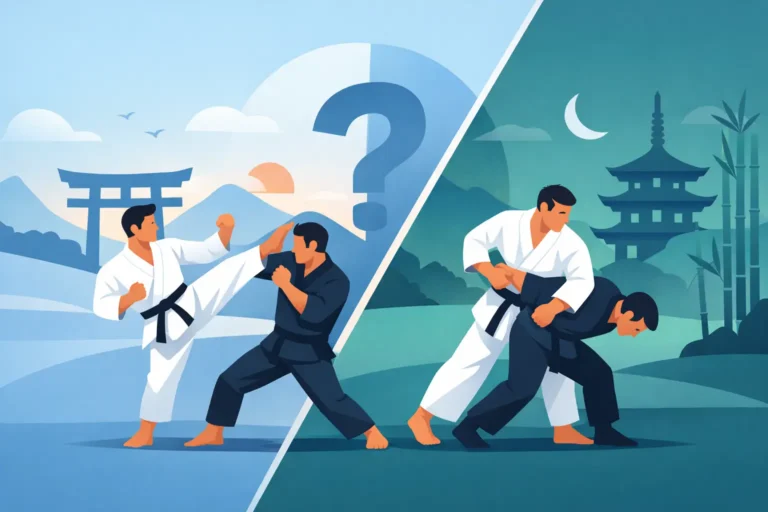
When a parent asks about karate or hapkido self defense, they usually are not asking about trophies, belts, or flashy kicks. They are asking something much more personal. Will this help my child stand taller at school? Will this give my teen better judgment under pressure? Will this help me feel safer and more confident in everyday life?
That is the real question, and it deserves a real answer.
Karate or Hapkido Self Defense – What are you actually training for?
Karate and Hapkido can both improve focus, discipline, fitness, and confidence. That part is true. But when people compare them for self-defense, the difference is not just style. It is training emphasis.
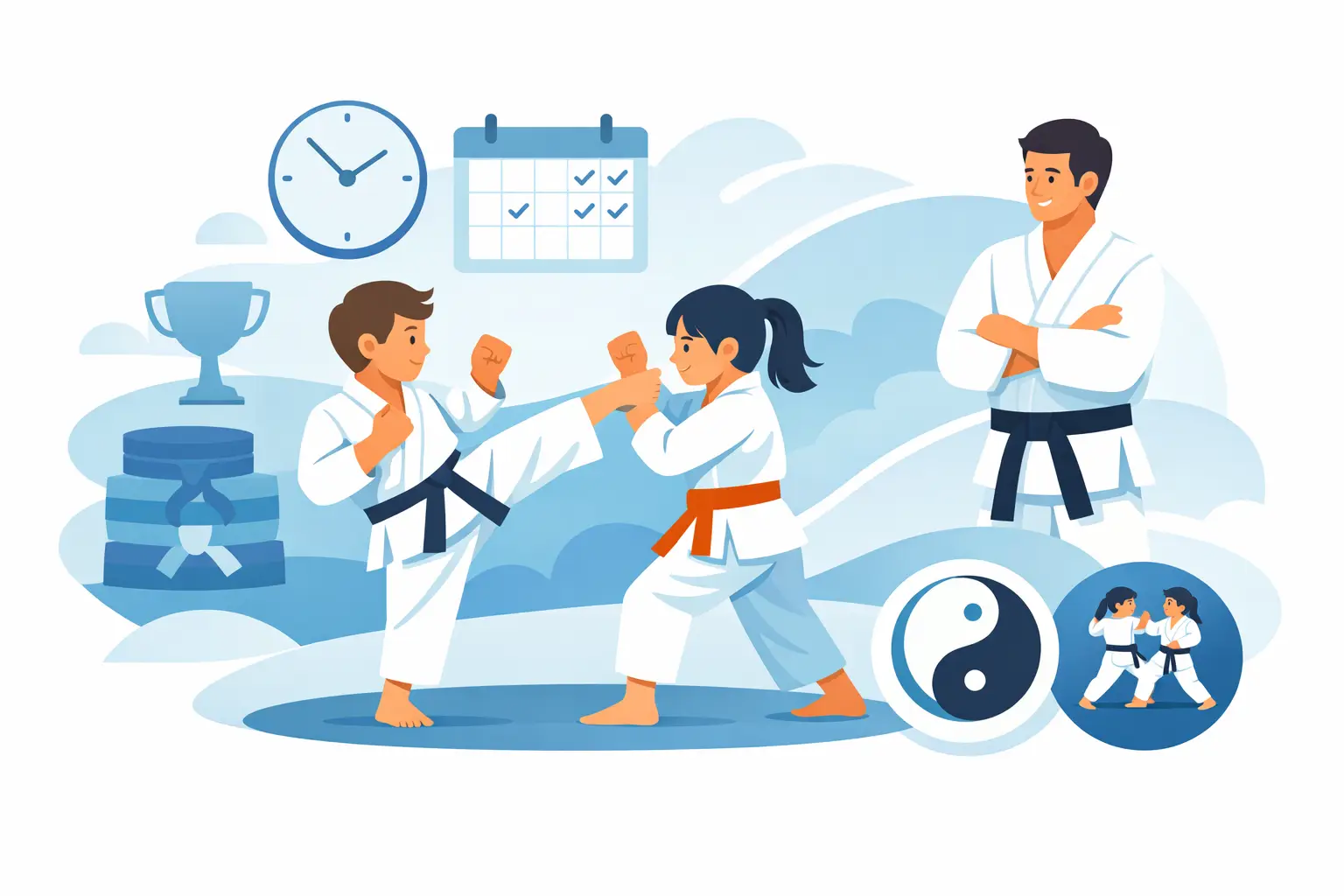
Traditional karate often builds strong basics through strikes, stances, timing, and repetition. Students learn to generate power, sharpen coordination, and develop control. In many schools, forms and structured partner work play a big role. That can be excellent for character development and body awareness, especially for children who benefit from routine and clear progression.
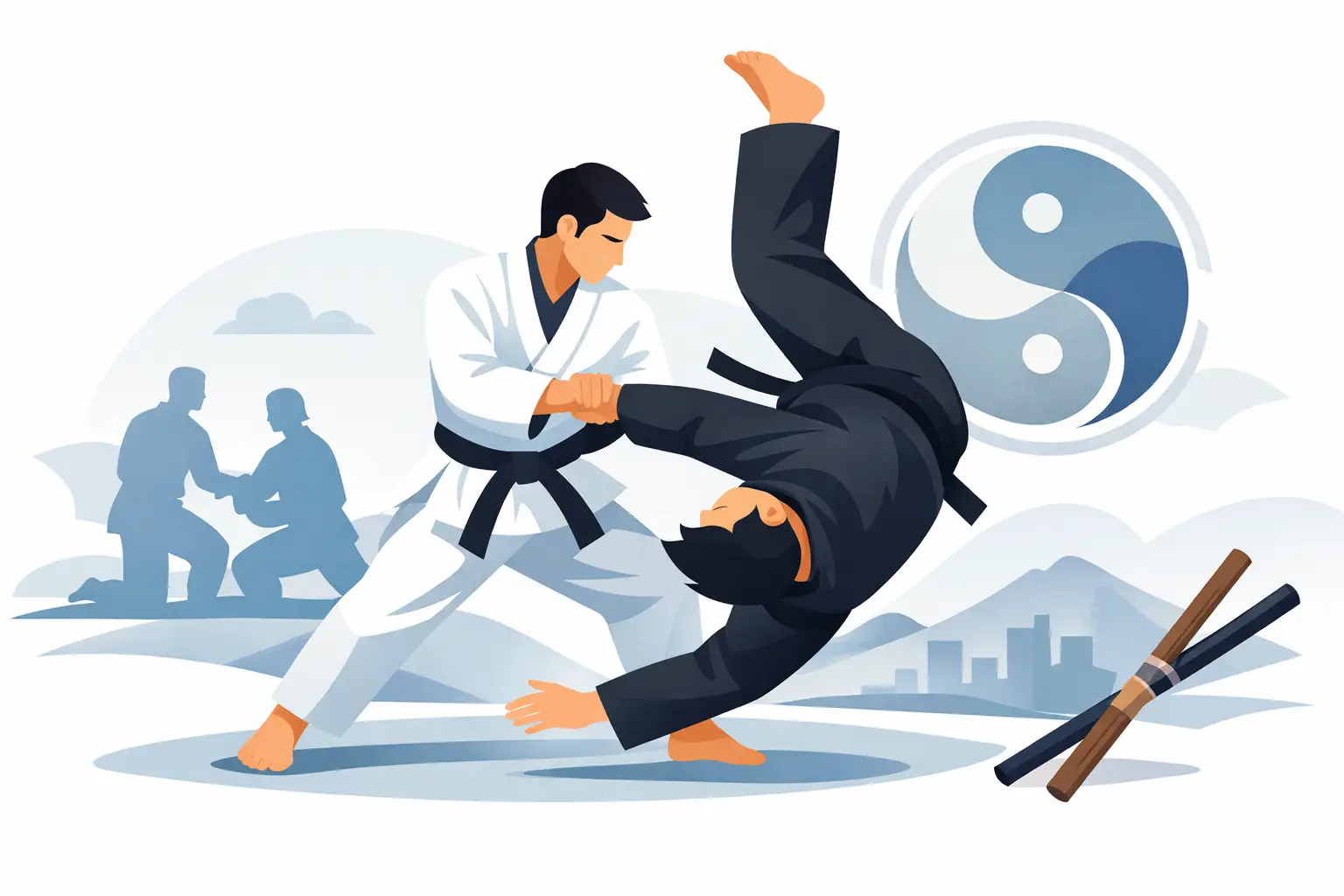
Hapkido usually approaches self-defense from a more practical angle. It includes striking, but it also emphasizes escapes, joint locks, redirection, balance breaks, grabs, and defense against common real-world situations. Instead of assuming a clean sparring exchange, Hapkido often deals with the messier problems people actually worry about – wrist grabs, bear hugs, aggressive pushing, hair pulls, and close-range threats.
That matters because self-defense is rarely neat. It is fast, awkward, emotional, and unpredictable.
Is karate or hapkido self defense better for real-world situations?
If your goal is practical self-defense first, Hapkido usually has the advantage.
That does not mean karate is ineffective. A good karate school can absolutely help a student become tougher, sharper, and harder to intimidate. Strong striking skill, confidence, and distance management are valuable. In some situations, that may be more than enough.
But if you are choosing based on everyday self-protection, Hapkido tends to cover a wider range of situations. Many real confrontations start with grabbing, crowding, shoving, or surprise contact. Hapkido trains students to stay calm in that range and respond with leverage, body positioning, and practical movement. For kids, teens, and adults, that often feels more directly connected to the situations they fear most.
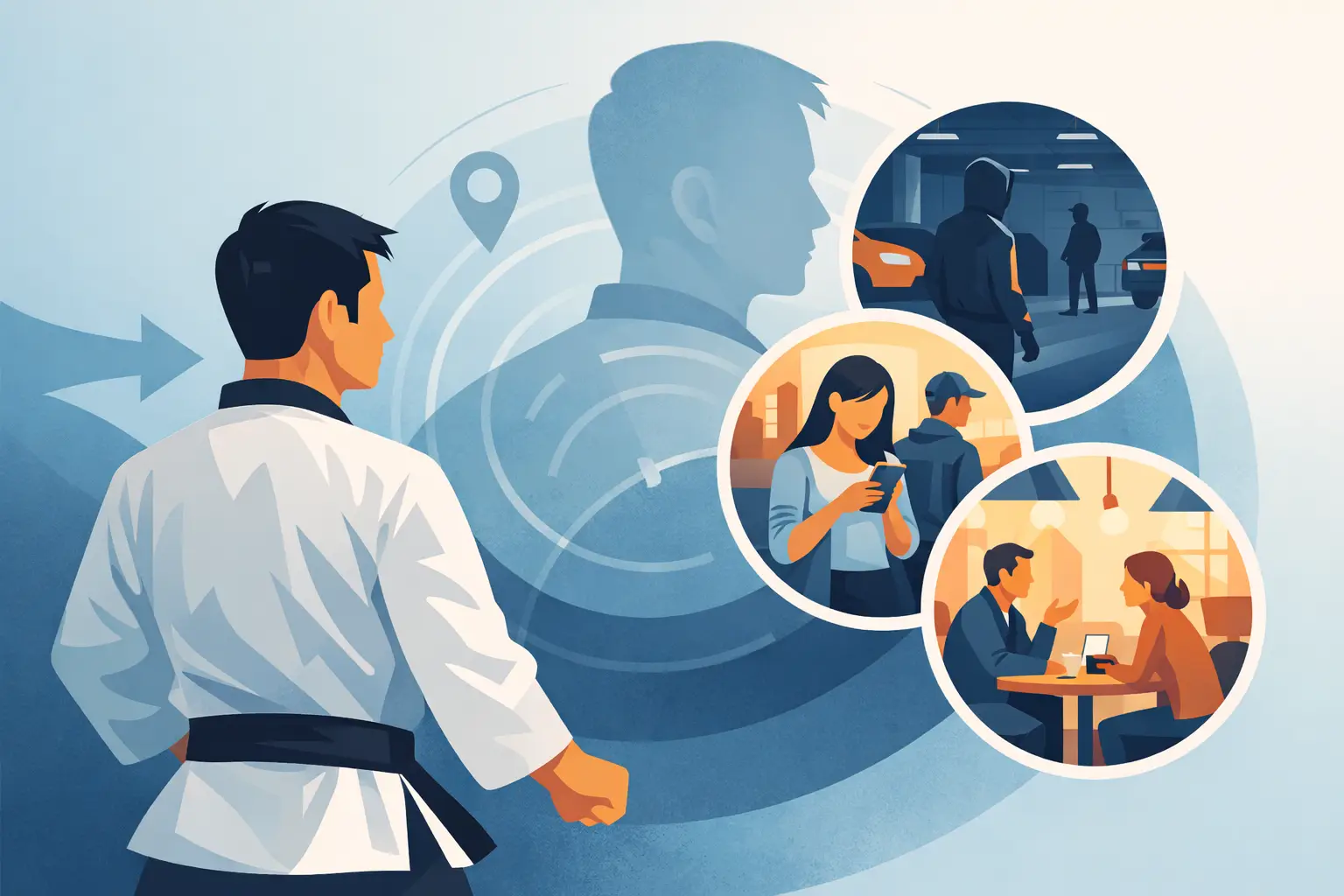
Parents especially notice this difference. They are not usually worried about whether their child can perform a perfect form. They want to know whether their child can recognize danger, use their voice, create space, break free, and get to safety. That is where Hapkido-based training speaks very clearly.
For children, confidence matters as much as technique
For younger students, the best self-defense training does more than teach moves. It changes posture, voice, eye contact, and decision-making.
A shy child who begins to speak more clearly, make stronger eye contact, and carry themselves with confidence is already harder to target. A child who understands boundaries, listens well, and can stay calm under pressure is better prepared before any physical technique is even needed.
This is one reason many families lean toward Hapkido when comparing karate or hapkido self defense. Hapkido-based training often includes a very direct connection between physical skills and real-life safety habits. Students practice awareness, assertiveness, and escape-based responses instead of only memorizing sequences. That can be powerful for children who are dealing with bullying, social pressure, or fear.
At Inner-Power Martial Arts, that practical approach is a big part of why families stay. They want their child to gain coordination and discipline, yes, but they also want that child to feel stronger from the inside out.
For teens, the question becomes pressure and realism
Teenagers face a different kind of challenge. The issue is not only physical safety. It is peer pressure, emotional stress, social dynamics, and the fear of freezing in the wrong moment.
A teen who trains in karate may develop excellent discipline and strong striking fundamentals. That has real value. But if the goal is self-defense for parking lots, school conflicts, college preparation, or unwanted grabbing, Hapkido often feels more relevant. It trains for close contact, off-balancing, escapes, and controlling an aggressor without relying only on punching and kicking.
That balance matters. Many teens and parents want self-defense training that is serious, but not reckless. They want skills that help a student stay in control, avoid panic, and respond with purpose. Hapkido is well suited to that because it teaches students how to manage force rather than just exchange force.
There is also a confidence factor. Teens do not just need techniques. They need the steady belief that they can handle themselves. That kind of belief changes how they walk into school, sports, work, and new environments.
For adults, practical application usually wins
Adults tend to be more direct when they ask about self-defense. They want to know what works.
If an adult enjoys traditional martial arts, values striking mechanics, and wants a structured path with strong fundamentals, karate can be a great fit. It can improve fitness, sharpen focus, and build resilience.
But if the priority is realistic self-protection, Hapkido often checks more boxes. Adults face situations that happen up close – someone grabs an arm, invades space, shoves, or corners them. Hapkido addresses that range in a way many adults find immediately useful. It also tends to appeal to people who want self-defense without needing to become competitive fighters.
There is a second benefit too. Adults often carry stress in the body and mind. Practical self-defense training can relieve that stress because it replaces uncertainty with preparation. Confidence grows when training feels connected to real life.
The biggest factor is not the style. It is the school.
This is where the conversation gets more honest.
A great karate school will beat a weak Hapkido school every time. A poor instructor can make any martial art feel disconnected from reality. A strong instructor can make students safer, more focused, and more capable.
So when comparing karate or hapkido self defense, pay close attention to how classes are taught. Are students learning awareness and verbal assertiveness, or just repeating patterns? Are techniques explained in a way that makes sense under pressure? Is the training age-appropriate? Do students leave class looking more confident and more disciplined, not just more tired?
For families, culture matters too. Children learn best in an environment that is structured, encouraging, and consistent. Teens need challenge without intimidation. Adults need serious instruction without feeling lost on day one.
The right school should build skill and character at the same time.
When karate may be the better choice
Karate can be the better choice if a student thrives on tradition, enjoys striking, and benefits from a highly structured system of basics and repetition. Some children respond extremely well to that format. It can improve attention, respect, self-control, and athletic development.
It may also be a better fit if the local karate program is simply exceptional. The quality of coaching, the energy of the class, and the consistency of instruction all matter more than marketing claims.
And for some students, enjoying the art is what keeps them training long enough to become confident and capable. That should never be ignored.
When Hapkido is likely the better choice
Hapkido is often the better choice when self-defense is the top priority, especially for students who want skills tied closely to real-life situations. It is especially strong for people concerned about bullying, grabbing, personal boundaries, or feeling physically overpowered.
It also tends to connect well with students who are nervous at first. Because Hapkido includes practical escapes and control tactics, students can begin feeling capable early in their training. That early success can make a big difference for a child with low confidence or an adult who has never done martial arts before.
For many families, that is the turning point. They are not looking for a performance. They are looking for peace of mind.
The better question to ask
Instead of asking only which art is better, ask this: which program will help this student become more confident, more aware, and more prepared?
That answer depends on the person in front of you. A young child may need structure and courage. A teen may need pressure-tested confidence. An adult may need practical answers, not theory. The best self-defense training meets people where they are and helps them grow from there.
If your goal is real-world protection with strong character development, Hapkido usually gives more direct self-defense value. If your goal leans more toward traditional striking, discipline, and classical martial arts training, karate may be the better fit.
The smartest choice is the one that turns fear into confidence and practice into real readiness.