If you have ever asked your preschooler to put on shoes, come to the table, or look at you while you are speaking – and gotten no response – you are not alone. Parents often wonder how preschoolers develop listening skills, especially when their child seems energetic, distracted, or selective about what they hear. The good news is that listening is not a fixed trait. It is a skill, and like any skill, it grows through practice, structure, and the right kind of guidance.
For young children, listening is about much more than hearing words. It involves attention, self-control, memory, and the ability to follow through. That is why strong listening skills often show up alongside better behavior, more confidence, and smoother interactions at home, in school, and in group activities.
What listening really looks like in preschoolers
Many parents picture listening as quiet compliance. In real life, it is more complex than that. A preschooler who is developing well may still wiggle, ask questions, or need reminders. Good listening at this age usually means a child can pause, pay attention for a short period, understand a simple direction, and act on it.
That process takes a surprising amount of effort. A 4- or 5-year-old is still learning how to filter distractions, manage impulses, and hold information in mind long enough to respond. So when a child struggles to listen, it does not always mean defiance. Sometimes it means their brain is still building the foundation for focus.
This matters because listening is tied to safety as much as behavior. A child who can stop when told, respond to instruction, and stay aware of adults in a group setting is building habits that support confidence and everyday security.
How preschoolers develop listening skills over time
Preschoolers build listening skills through repetition and routine. They learn from hearing the same type of directions again and again, especially when adults are clear, calm, and consistent. Over time, predictable patterns teach children what to expect and how to respond.
They also learn through movement. This is a point many parents miss. Young children are not wired to sit still for long stretches and absorb verbal instruction the way older kids can. They often listen better when their bodies are engaged. A child who can march, clap, line up, balance, or mirror an action is often practicing listening in a way that fits their stage of development.
That is one reason structured activities can help so much. In a strong class setting, children hear a direction, process it quickly, and connect it to action. They begin to understand that listening is not passive. It is active, disciplined, and connected to self-control.
Why some preschoolers seem not to listen
Some children are naturally more intense, curious, or physically driven. Others are shy and become overwhelmed when too much language comes at them at once. Some do well one-on-one but struggle in busy environments. Listening challenges can show up for different reasons, and the right response depends on the child.
A common issue is that adults give too many directions at once. If a preschooler hears, “Go upstairs, get your sneakers, put your cup in the sink, and meet me by the door,” there is a good chance they will complete one part and forget the rest. That is not failure. That is age-appropriate overload.
Tone also matters. When children hear constant corrections, repeated warnings, or frustrated commands, they can start tuning out. On the other hand, a calm and direct voice tends to hold attention better. Firm does not have to mean harsh. In fact, children often respond best when expectations are strong but delivery is steady.
The role of structure, repetition, and clear expectations
Children feel safer when they know what is expected. Safety builds focus. When the environment is unpredictable, listening can break down fast. That is why routines help so much at this age.
Simple rituals like lining up before leaving the house, cleaning up after play, or responding to one-step instructions create patterns the brain can recognize. Repetition strengthens response time. Eventually, children stop relying on constant reminders because the habit becomes familiar.
Clear expectations also reduce power struggles. Instead of saying, “Be good,” it helps to say, “Eyes on me,” “Hands to yourself,” or “Walk to the door.” Specific language gives a preschooler something they can actually do. Vague language usually creates confusion.
This is where many families notice progress from structured youth programs. In settings where instructors use consistent cues, strong boundaries, and positive reinforcement, children often rise to the occasion. They begin to understand that listening leads to success, not just correction.
How movement-based learning improves listening
For preschoolers, movement is not a distraction from learning. It is often the path to learning. When a child hears “stand tall,” “freeze,” “turn,” or “follow me,” they are training auditory processing and self-control at the same time.
That combination is powerful. A child who practices stopping on cue is not only building listening skills. They are also developing body awareness, discipline, and the ability to regulate behavior under direction. Those skills carry over into classrooms, playgrounds, and social situations.
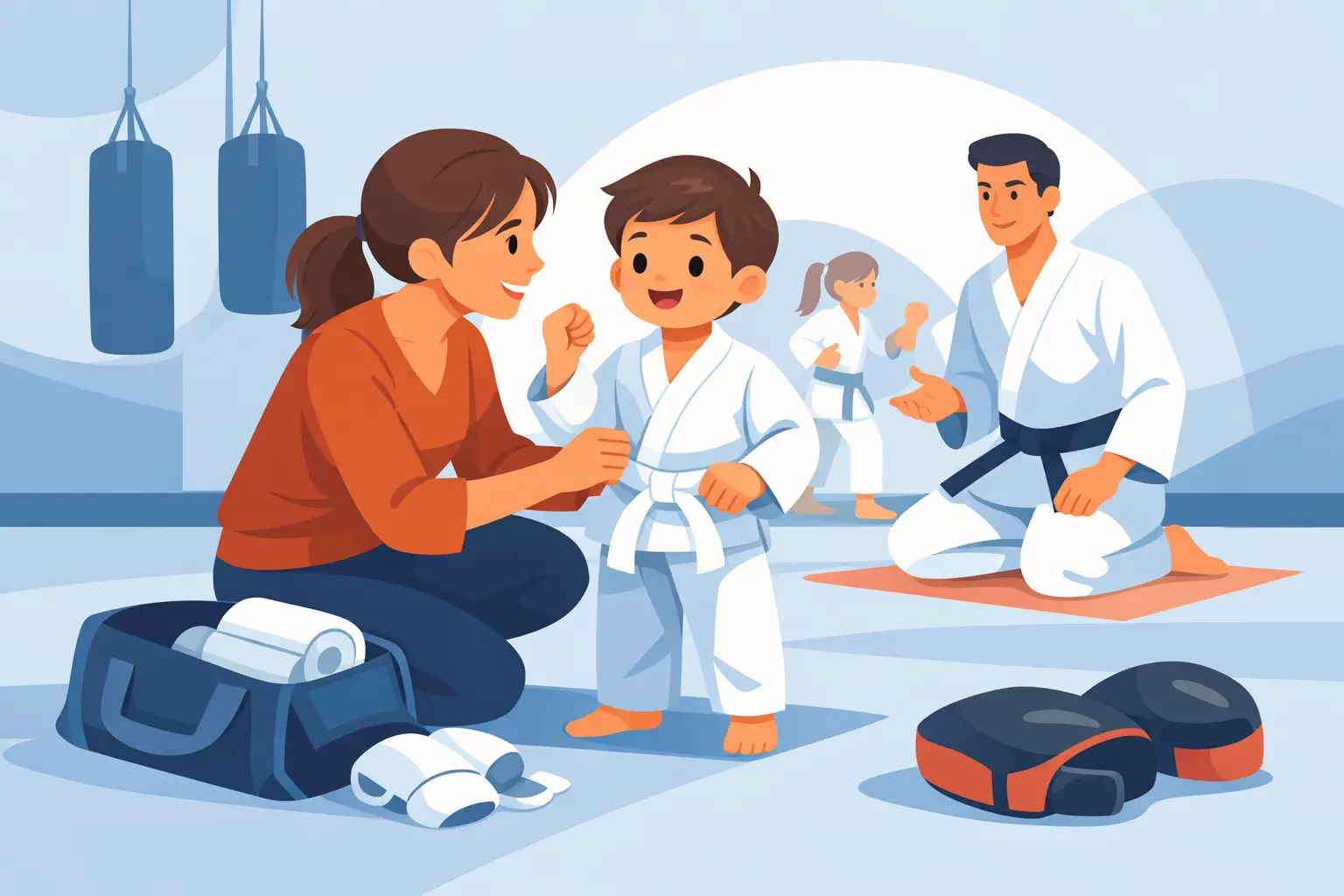
This is one reason martial arts can be such a strong fit for younger children. In a well-run beginner class, listening is built into every part of the experience. Kids hear short instructions, watch a model, and then respond with action. They learn when to move, when to wait, and when to focus. For children who are shy, energetic, or easily distracted, that kind of training can make listening feel clear and achievable.
At Inner-Power Martial Arts, for example, younger students are not expected to sit through long lectures. They are guided through structured, age-appropriate activities that connect focus with movement. For many families, that is where they first see a child start responding faster, following directions more consistently, and carrying that confidence home.
What parents can do at home
You do not need a perfect routine or a perfectly calm child to help listening grow. What helps most is consistency.
Start by getting your child’s attention before giving a direction. That may mean kneeling to eye level, using their name, and keeping the instruction short. One clear step is usually better than three rushed ones. If needed, have them repeat it back to you.
It also helps to create listening moments during regular activities. Cleanup time, getting dressed, walking into a store, and bedtime routines all offer chances to practice. You are not looking for military precision. You are building the habit of hearing, processing, and responding.
Praise matters too, but it works best when it is specific. Instead of a broad “good job,” try “You listened the first time” or “I like how you stopped and looked at me.” That tells the child exactly what success looked like.
There is also a trade-off to keep in mind. Some parents become so focused on immediate obedience that every interaction turns corrective. That can backfire. Strong listening grows best in an environment that is firm, warm, and predictable. Children need boundaries, but they also need encouragement.
When listening struggles need a closer look
Every preschooler has off days. Tiredness, hunger, overstimulation, and transitions can all affect how well a child listens. If the struggle is occasional, that is usually part of normal development.
If a child consistently cannot follow simple directions, rarely responds to their name, or seems far behind peers in communication and attention, it may be worth discussing with a pediatrician or early childhood specialist. Support is not a label. It is a way to understand what a child needs.
For many children, though, the issue is not inability. It is a lack of structured opportunities to practice. Once expectations become clear and consistent, progress often comes faster than parents expect.
Helping preschoolers build confidence through listening
Listening is not just about making life easier for adults. It is a foundation for confidence. A child who can pay attention, follow directions, and succeed in a structured setting starts to feel more capable. That feeling matters.
It affects how they enter a classroom, join a group, respond to correction, and handle challenges. A child who listens well often feels more secure because they understand what to do next. That kind of clarity lowers frustration and helps children trust themselves.
For parents, that is the bigger picture. We are not only teaching children to hear words. We are teaching them to focus under pressure, respond with control, and move through the world with more confidence and awareness. Those are skills that matter far beyond the preschool years.
If your child is still learning, that does not mean they are behind. It means they are in the middle of the process, and with the right structure, patience, and practice, strong listening can become one of the skills that helps them stand taller in every part of life.