
A child who avoids eye contact, stays quiet when others interrupt, or freezes when pressured is not always lacking confidence. Often, they just have not practiced what confidence feels like in the body. That is why parents so often ask, can self defense build assertiveness? In the right environment, the answer is yes – because assertiveness is not just a mindset. It is a skill that grows when someone learns how to stand, speak, move, and respond with purpose.
Why self defense and assertiveness are closely connected
Assertiveness means expressing yourself clearly, setting boundaries, and responding without shrinking or overreacting. Self-defense training helps with that because it teaches more than strikes or escapes. It teaches presence.
When students practice posture, eye contact, balance, verbal responses, and controlled movement, they start to feel more capable in everyday situations. A child who once mumbled may start speaking louder. A teen who felt intimidated may stop apologizing for taking up space. An adult who used to second-guess every interaction may begin responding more calmly and directly.
That change matters because many people confuse assertiveness with aggression. They are not the same. Aggression tries to dominate. Assertiveness protects boundaries without losing control. Good self-defense training should build the second, not the first.
Can self defense build assertiveness in kids?
For many kids, especially those who are shy or worried about bullying, assertiveness does not come from being told to “be more confident.” It comes from repeated success in structured situations.
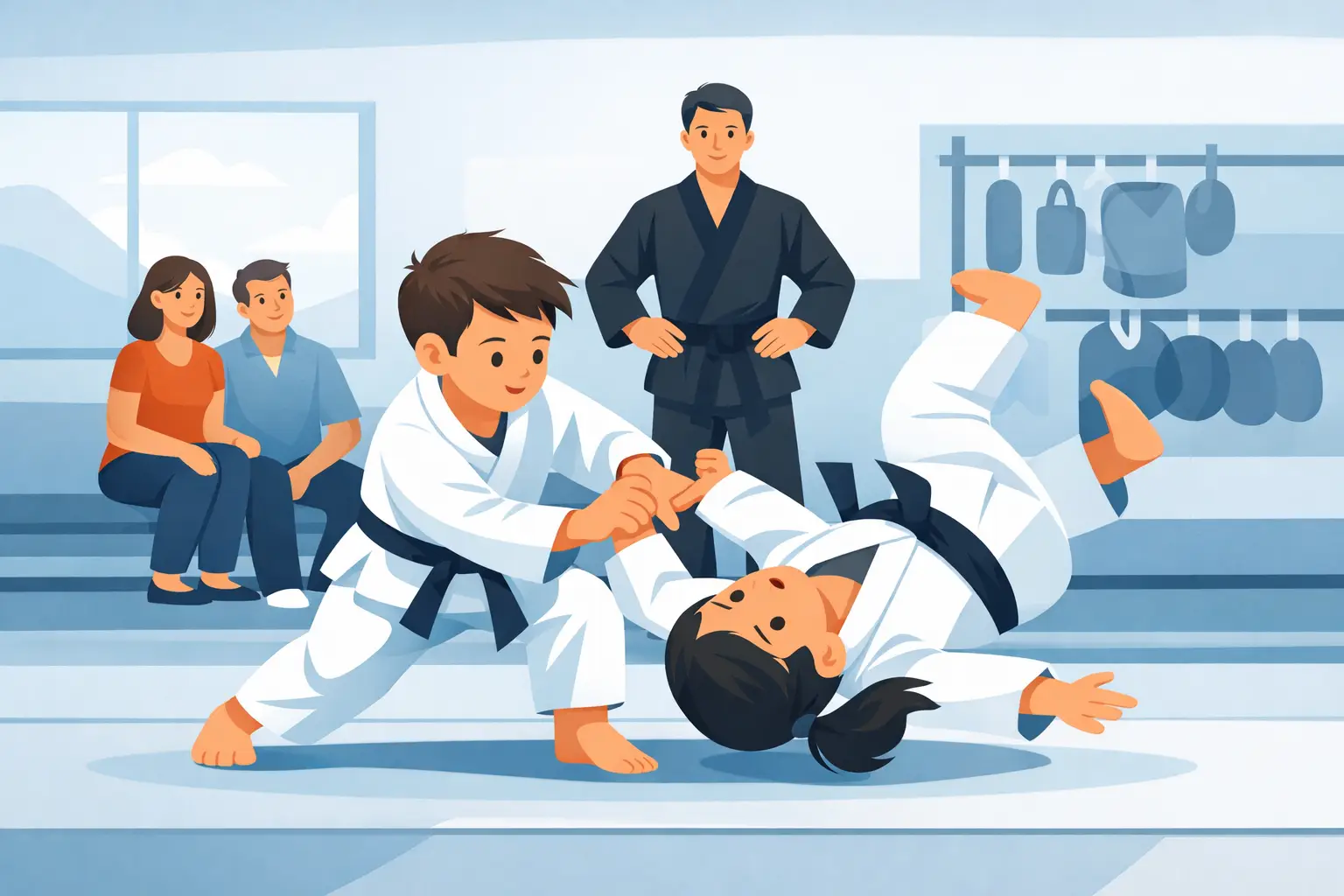
In class, children learn to follow directions, use a strong voice, and move with intention. They practice saying no. They learn what to do if someone grabs them, crowds them, or tests them socially. Over time, that practice changes how they carry themselves outside the school.
Parents often notice small signs first. Their child starts making eye contact. They answer questions more clearly. They seem less rattled by teasing. They stop looking to others before speaking. Those shifts may look minor, but they are often the early signs of real assertiveness developing.
This is especially valuable for kids who tend to freeze. A freeze response is common when children feel overwhelmed. Practical self-defense training gives them a framework. Instead of panic, they begin to recognize options. That sense of choice is one of the foundations of assertiveness.
What helps children become more assertive through training
Not every martial arts class produces the same result. If a program is too passive, too focused on memorizing forms, or too intimidating, a shy child may not come out of their shell. What works best is training that is structured, encouraging, and practical.
Kids respond well when instructors coach them to speak clearly, respect personal space, and handle pressure in age-appropriate ways. They also benefit when expectations are firm but supportive. That balance helps a child feel safe enough to stretch and strong enough to grow.
For younger students, assertiveness often begins with simple habits – standing tall, using a confident voice, and understanding that they are allowed to protect their space. For older kids, it often grows into better self-control, stronger boundaries, and more confidence with peers.
Can self defense build assertiveness in teens and adults?
Absolutely, but the process looks a little different.
Teens often struggle with social pressure, fear of embarrassment, and uncertainty about how to respond in tense situations. Self-defense training gives them a rare chance to practice directness in a healthy setting. They learn to manage nerves, stay composed, and communicate with more authority. That can carry into school, work, friendships, and everyday decision-making.
Adults benefit for similar reasons. Many adults are not physically incapable. They are mentally hesitant. They second-guess themselves, avoid confrontation, and hope uncomfortable situations resolve on their own. Self-defense training can interrupt that pattern.
When adults learn how to create space, use their voice, and respond under pressure, they often become more decisive in daily life. That might mean setting firmer boundaries, feeling less intimidated in public, or simply walking with more confidence. The physical skills matter, but the bigger shift is often psychological. You stop feeling helpless.
How training changes behavior outside the mat
One of the strongest benefits of self-defense is that it turns confidence into something concrete. Instead of trying to think your way into assertiveness, you train your nervous system to handle stress more effectively.
That matters because many people know what they should say in a difficult moment, but they cannot access it when pressure hits. Their shoulders tense, their breathing shortens, and their mind goes blank. Practical training helps close that gap.
By repeating controlled drills, students become more familiar with discomfort. They learn to breathe, stay balanced, and respond with intention instead of panic. This does not make someone fearless. It makes them more functional under stress, and that often looks like assertiveness in real life.
A student who trains consistently may become less reactive at school, calmer during conflict, and more willing to speak up early instead of waiting until frustration boils over. That is an important distinction. Real assertiveness is proactive. It addresses problems before they grow.
Where the answer becomes “it depends”
Can self defense build assertiveness? Yes, but not automatically.
Training has to be taught well. If a program relies on fear, humiliation, or macho pressure, students may become more anxious, not more confident. If classes focus only on physical techniques without teaching awareness, verbal boundaries, and emotional control, assertiveness may not improve much.
It also depends on the student. Some children become more confident quickly. Others need time. A teen who has dealt with bullying for years may need many small wins before they begin to trust themselves. An adult with a long history of avoiding conflict may feel awkward being direct at first.
That does not mean training is not working. It means real growth is often gradual. Assertiveness is built through repetition, support, and consistency.
What parents should look for in a self-defense program
If your goal is not just activity, but real confidence and stronger boundaries, look beyond flashy moves. The best programs teach students how to carry themselves before they ever need to defend themselves physically.
A strong class should emphasize posture, awareness, verbal skills, discipline, and emotional control alongside technique. Instructors should know how to challenge students without crushing them. Children should leave class feeling stronger, not scared. Teens and adults should feel pushed, but also supported.
This is one reason families are drawn to practical Hapkido-based training at Inner-Power Martial Arts. The goal is not performance for performance’s sake. It is helping students become harder to intimidate, more prepared under pressure, and more confident in everyday life.
Assertiveness is a life skill, not just a safety skill
Parents usually start looking into martial arts because of a specific concern. Maybe their child is shy. Maybe they are being picked on. Maybe they struggle to focus, speak up, or believe in themselves. Adults often come for self-protection, fitness, or stress relief.
What many discover is that assertiveness shows up everywhere. It shows up in how a child answers a teacher. It shows up in whether a teen follows the crowd or trusts their own judgment. It shows up in whether an adult sets a boundary at work, says no without guilt, or walks through the world with calm awareness instead of quiet fear.
That is why self-defense can have such a lasting impact. It teaches people they are not powerless. It gives them a stronger voice, a steadier posture, and a clearer sense of what they will and will not accept.
No class can promise instant transformation. But the right training can give a child, teen, or adult something deeply valuable – proof. Proof that they can stay calm, act decisively, and carry themselves with more confidence than they thought possible.
And once someone starts feeling that kind of inner strength, speaking up becomes a lot more natural.