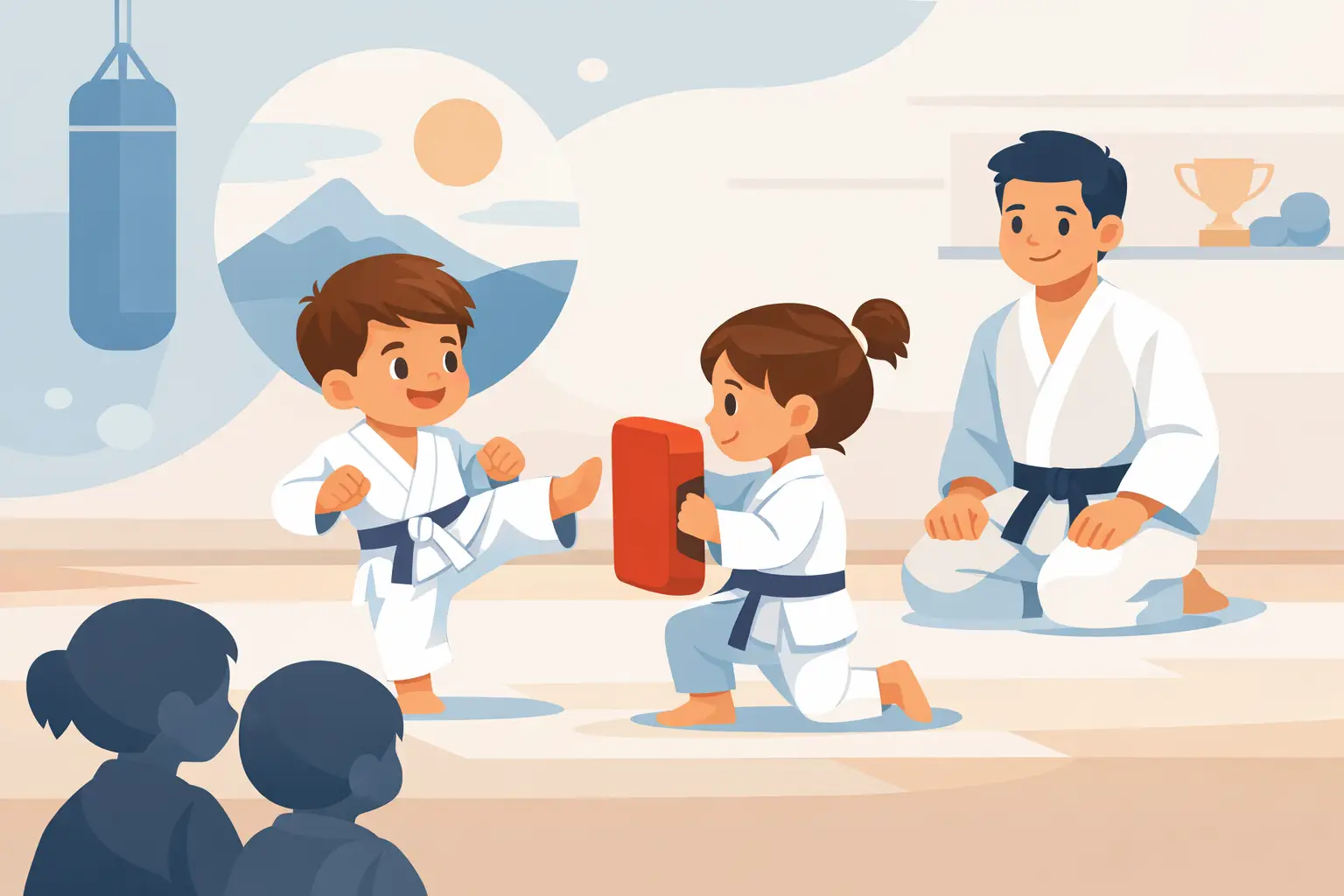
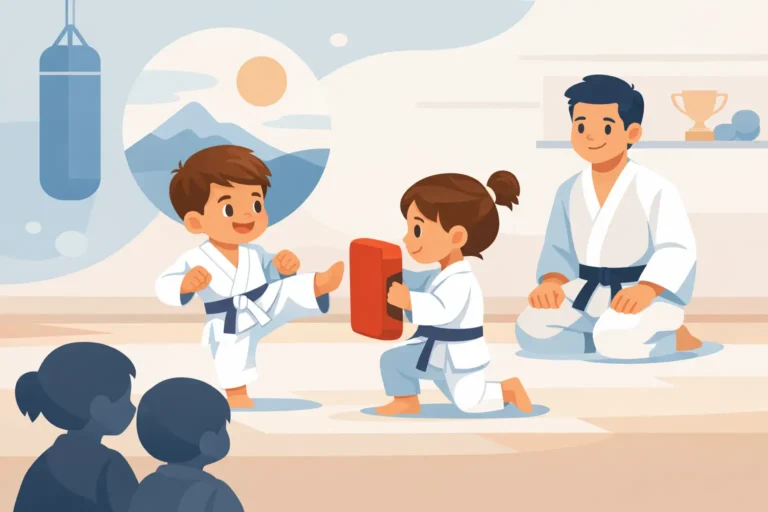
Some parents watch their four- or five-year-old bounce off the walls and think, “They need an activity.” Others see a child hang back at the playground, avoid eye contact, or melt down when routines change and think, “They need confidence.” Preschool martial arts classes can help with both, but only when the program is built for young children instead of treating them like tiny adults.
That difference matters more than most parents realize. At the preschool age, kids are not ready for long lectures, rigid technique breakdowns, or a class structure designed for older students. They learn through movement, repetition, encouragement, and clear boundaries. When a martial arts school understands that, class becomes more than exercise. It becomes a place where a child learns how to listen, follow directions, manage emotions, and carry themselves with more confidence.
What preschool martial arts classes should really teach
For parents, the biggest question is usually simple: will this actually help my child in real life?
The best preschool martial arts classes do not focus on creating perfect technique right away. They focus on habits that support growth at home, in school, and in social settings. That means learning how to stand still when it is time to listen, how to try again after making a mistake, how to respect personal space, and how to respond to instruction without shutting down or acting out.
Those skills may sound small, but for a four-, five-, or six-year-old, they are the foundation for everything else. A child who learns to focus for a few extra minutes, control impulsive behavior, and participate confidently in a group is building life skills, not just martial arts skills.
This is also where parents often notice the first real changes. A shy child starts speaking up more. A child who struggles with transitions gets more comfortable following a routine. A high-energy child begins channeling that energy in a productive way instead of turning every room into chaos.
Confidence comes before self-defense
Parents are often drawn to martial arts because they want their child to be safer and stronger. That makes sense. But with younger children, confidence usually comes first.
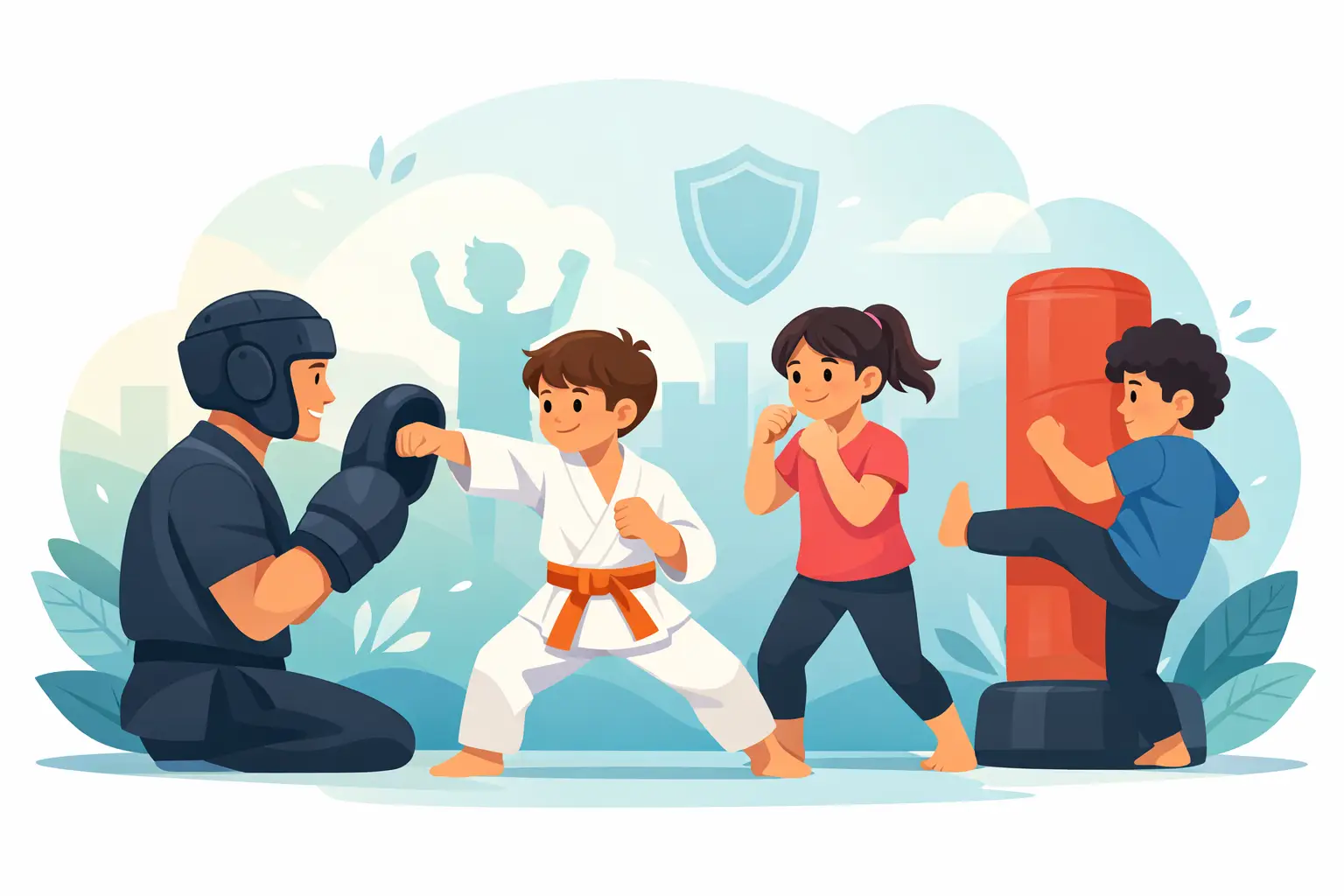
A preschooler does not need a long list of complex self-defense techniques. They need to learn how to stand tall, use their voice, and recognize boundaries. They need to understand that they can say no, ask for help, and carry themselves with enough confidence that they are less likely to look like an easy target for teasing or social pressure later on.
This is one reason practical martial arts training can be so valuable for young kids. It teaches body awareness and assertiveness in a way that feels active and empowering. Instead of simply telling a child to “be confident,” a good class gives them repeated experiences of success. They bow in, follow directions, complete drills, and hear positive feedback for effort and improvement. Confidence starts to become something they feel, not just something adults talk about.
Not every class is right for every preschooler
This is where parents need to trust their instincts. Preschool martial arts classes can be excellent, but they are not all the same.
Some programs are too loose, which means kids burn energy but do not really learn discipline. Others are too strict or too advanced, which can leave a younger child feeling frustrated, overwhelmed, or constantly corrected. The right class should strike a balance. It should be structured enough to teach respect and focus, but warm enough that a young child feels safe trying, failing, and trying again.
That balance is especially important for children who are naturally hesitant, sensitive, or easily distracted. They do best in an environment where instructors know how to redirect behavior without shaming, build attention span gradually, and keep classes moving at a pace that matches the age group.
A strong preschool program should feel purposeful from the first few minutes. There should be a clear routine, simple expectations, and an instructor who knows how to hold a room full of young children with confidence. Parents can usually sense that quickly.
The benefits parents notice at home and school
The most meaningful results from preschool martial arts classes often show up outside the academy.
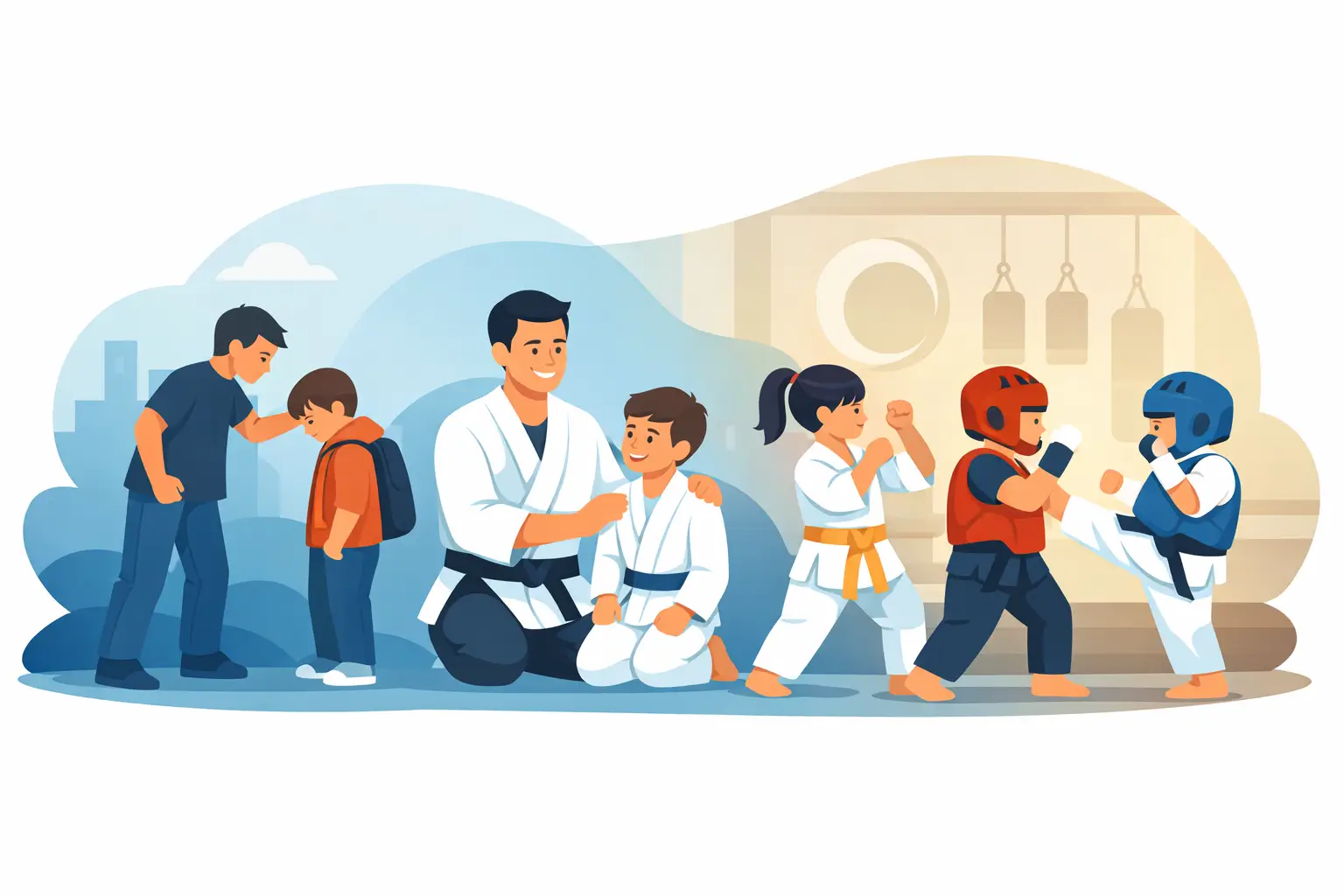
Parents may see better listening, smoother transitions, and fewer emotional blowups when a child is asked to stop one activity and start another. Teachers may notice improved participation, better body control, and more willingness to follow group directions. These are not overnight changes, and every child develops at a different pace, but consistent training tends to reinforce the same qualities families want to build anyway: focus, patience, respect, and resilience.
There is also a physical side that matters. Young kids are still developing balance, coordination, posture, and spatial awareness. Martial arts drills can support all of that in a way that feels fun and engaging. A child who used to seem clumsy or disconnected from their body can start moving with more control and confidence over time.
And for children who have a hard time with frustration, martial arts can be a healthy proving ground. They learn that missing a drill or losing focus is not the end of the world. They reset, listen, and try again. That lesson carries real weight later in school, sports, and social situations.
Why age-specific instruction matters in preschool martial arts classes
Preschoolers need a different teaching style than older kids. That may seem obvious, but many schools still group children too broadly or teach every class with the same approach.
A proper early childhood martial arts program uses short activities, frequent transitions, and simple, repeatable language. It rewards attention quickly and often. It understands that a child this age may need movement, visual cues, and encouragement more than explanation.
That is why age-segmented training works so well. A class designed specifically for ages four to six can focus on developmental wins that make sense for that stage: listening the first time, staying in a line, taking turns, following two-step instructions, and building the confidence to participate without a parent holding their hand.
At Inner-Power Martial Arts, that early age group is approached with exactly that mindset. The goal is not to rush children into advanced material. It is to build the focus, discipline, and inner strength that set them up for long-term success, both on the mat and off it.
What parents should look for before enrolling
If you are comparing schools in Howell or the surrounding Monmouth County area, pay attention to how the class feels, not just what the website promises.
Watch whether instructors connect with children at eye level while still maintaining authority. Notice whether kids are engaged or just wandering through the motions. Look for a program that teaches respect and structure without relying on fear or intimidation.
It also helps to ask what the school is really trying to develop in younger students. If the answer is only belts, kicks, and punches, that is incomplete. For preschoolers, the bigger wins are confidence, self-control, listening, and emotional resilience. Physical skills matter, but they should support the larger goal of helping a child grow stronger from the inside out.
Parents should also be realistic about readiness. Some children thrive right away. Others need a little time to adjust to group instruction or separation from mom or dad. That does not mean the class is a bad fit. It may simply mean the child is still building comfort with something new. A good instructor knows how to work with that process.
The long-term value starts early
One of the smartest things about starting martial arts in the preschool years is that the habits develop early. A child who learns discipline, focus, and confidence at five has a better chance of carrying those traits into elementary school and beyond.
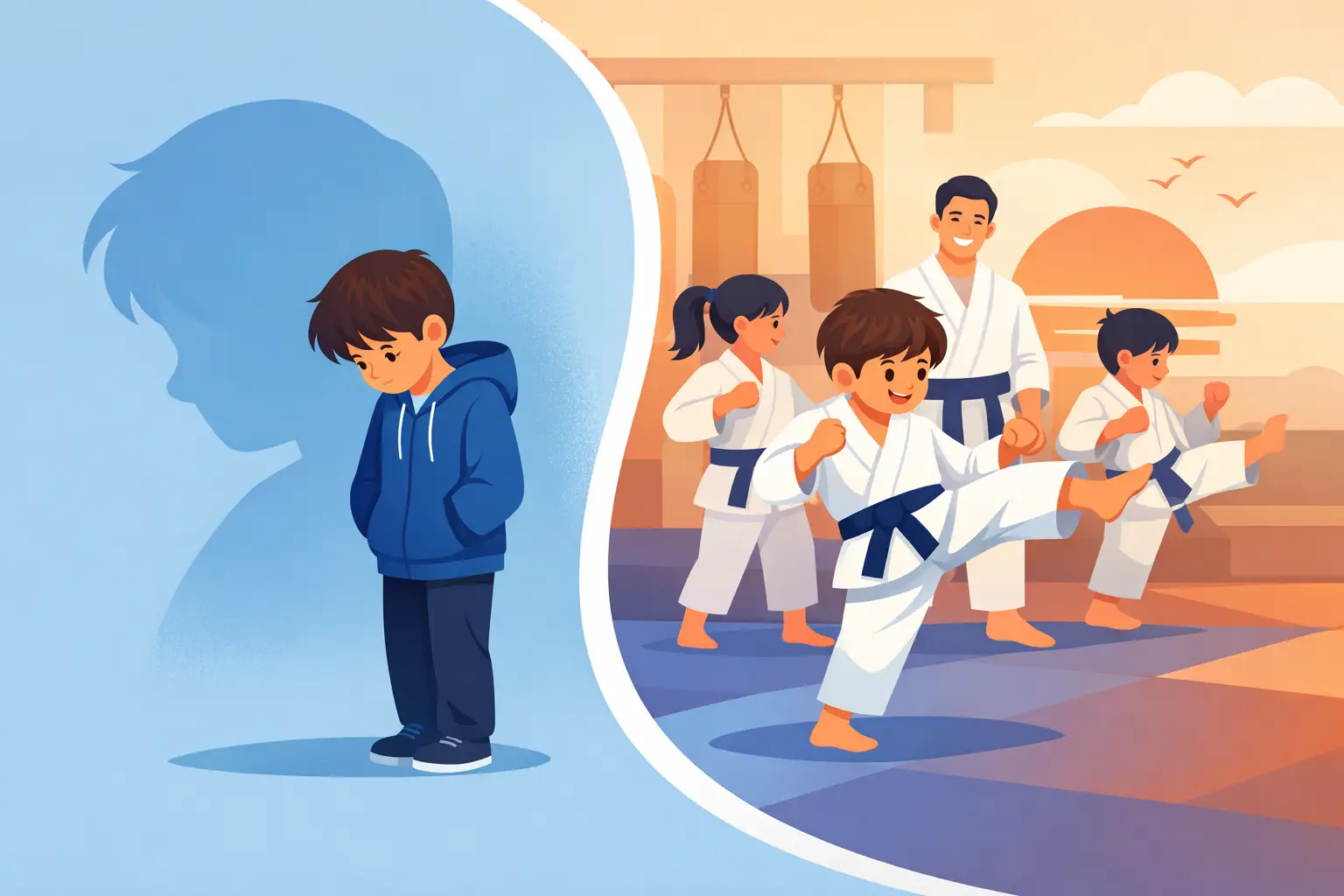
That does not mean every preschooler should be enrolled in a serious competitive program or pushed too hard too soon. It means early training can create a strong base. When the environment is positive, structured, and practical, children begin to see themselves differently. They stop thinking of themselves as the kid who is too shy, too wild, too unfocused, or too unsure. They begin to believe they can listen, learn, and succeed.
That shift is powerful. It affects how they walk into a classroom, how they handle challenges, and how they respond when life gets uncomfortable.
For many families, that is the real value of preschool martial arts classes. Not just better movement, not just a fun activity, and not just another item on the weekly schedule. It is the chance to help a young child build confidence before self-doubt gets too comfortable. And when that foundation is built early, a lot of good things can grow from it.