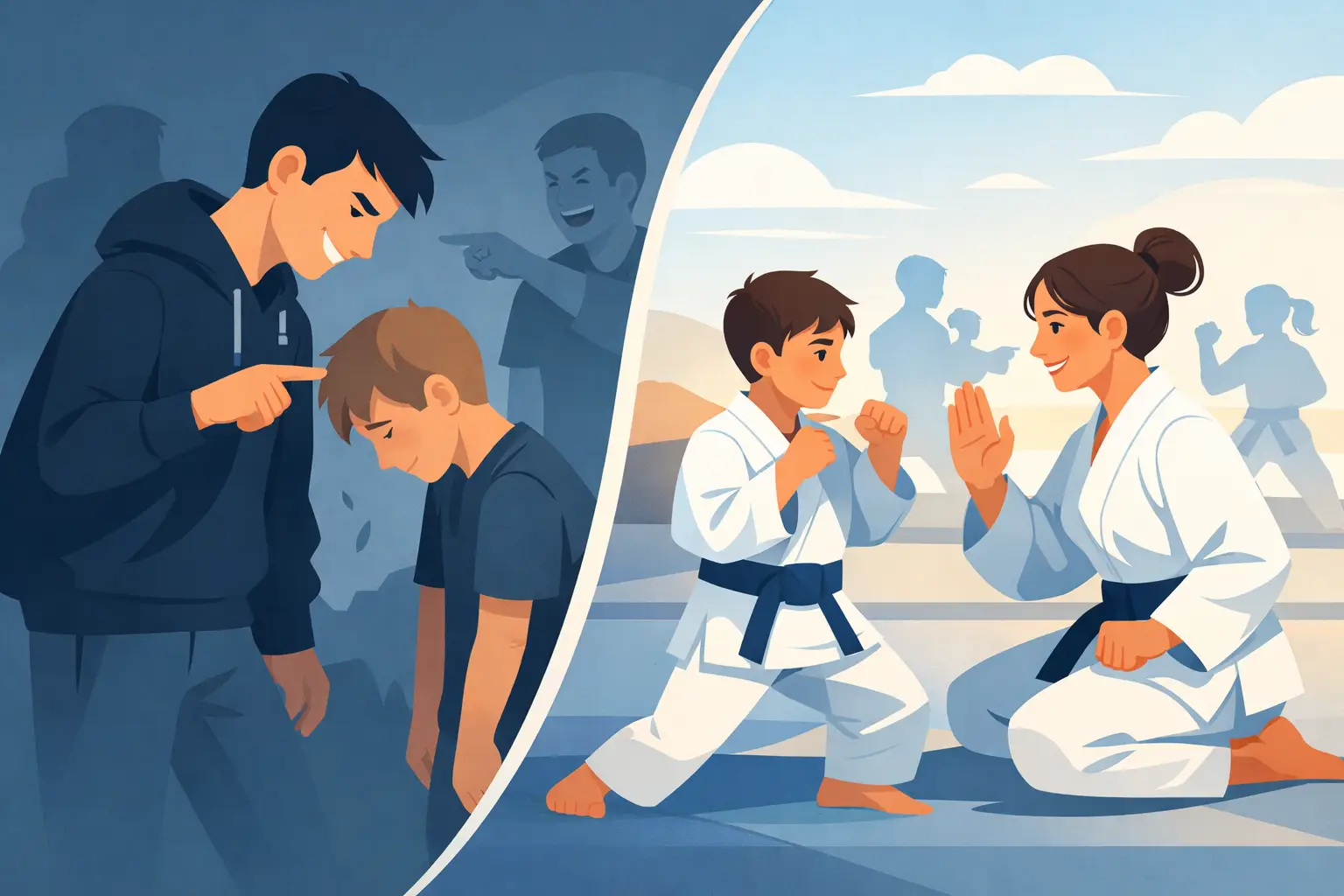
A child doesn’t usually say, “I’m being bullied, and I need a confidence-building program.” More often, parents notice the signs first. Their son suddenly wants to skip school. Their daughter gets quiet in group settings. A normally energetic kid starts shrinking back, avoiding eye contact, or second-guessing everything.
That is where bullying prevention through martial arts can make a real difference. Not because martial arts teaches kids to fight, but because the right training changes how they carry themselves, how they respond under pressure, and how they believe in their own ability to handle hard situations.
Why bullying happens in the first place
Bullies tend to look for easy targets. They often test social boundaries, looking for the child who seems uncertain, isolated, reactive, or afraid to speak up. That does not mean bullying is the victim’s fault. It means confidence, posture, emotional control, and assertive communication matter more than many people realize.
This is one reason martial arts can be so effective. A strong program works on the whole child, not just kicks and blocks. Students learn to stand taller, speak more clearly, follow directions, manage frustration, and stay composed when someone tries to intimidate them. Those traits change social dynamics before a situation ever becomes physical.
Parents are often surprised by this. They may come in asking about self-defense, but what really helps their child first is the confidence to make eye contact, use a strong voice, and stop acting like an easy target.
How bullying prevention through martial arts actually works
The best martial arts programs do not encourage aggression. They teach control. That distinction matters.
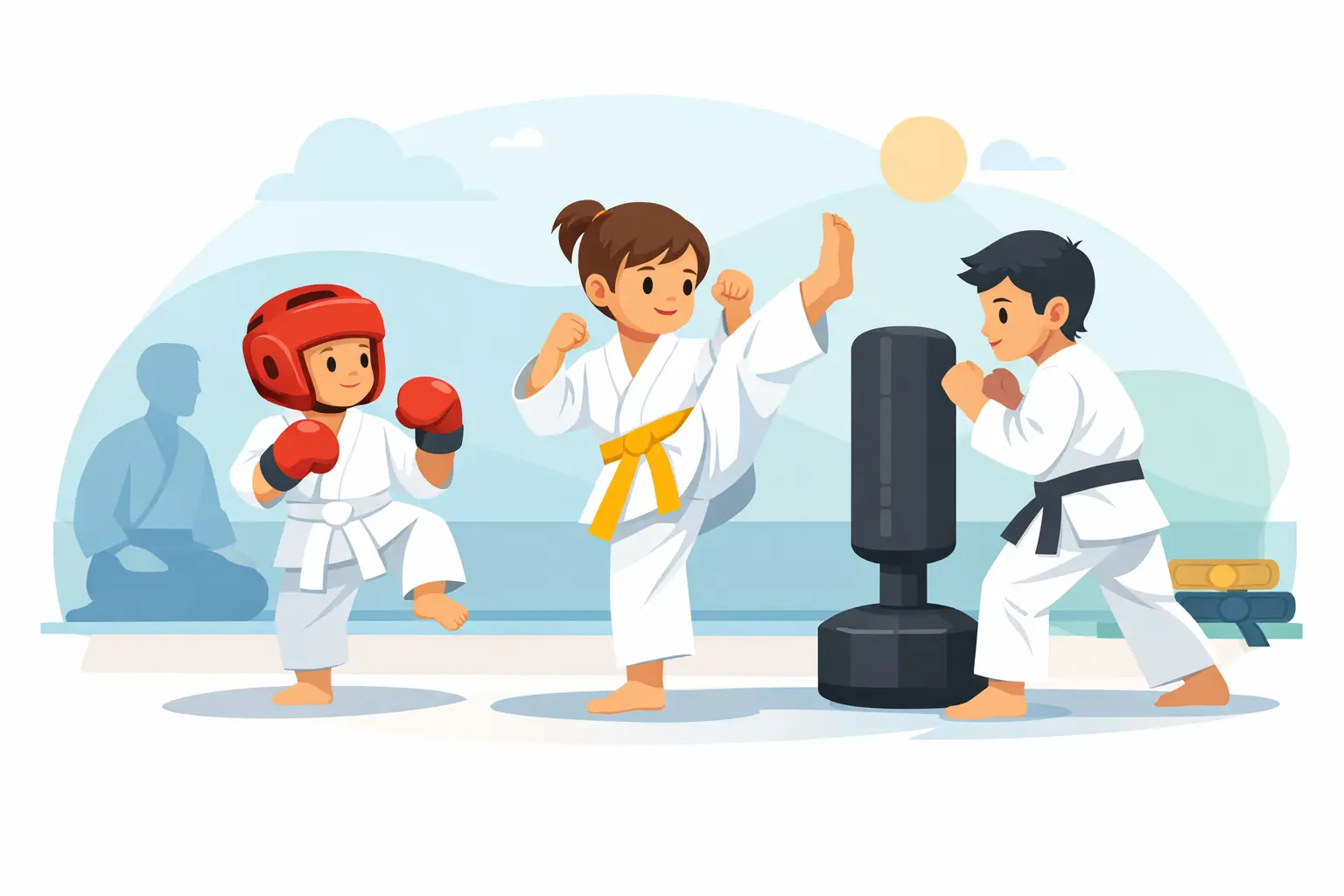
When a child trains consistently, several things start happening at once. Their body gets stronger, which helps them feel less physically vulnerable. Their focus improves, which helps them read situations more clearly. Their discipline grows, which helps them avoid impulsive reactions. And their self-respect rises, which often changes how other kids treat them.
A good instructor also teaches practical boundaries. That means students learn when to walk away, when to get help, how to use their voice, and how to protect themselves only if there is no other safe option. For families, that balance is critical. Parents do not want a child who becomes more confrontational. They want a child who becomes harder to intimidate.
That is the real value. Bullying prevention through martial arts is not about turning a shy child into a fighter. It is about helping that child become calm, capable, and confident enough that bullying loses some of its power.
Confidence is often the first line of defense
Children who feel unsure of themselves tend to show it in small ways. They look down. They hesitate when speaking. They freeze when challenged. Other kids notice those signals quickly.
Martial arts training helps replace that uncertainty with presence. Students practice standing in strong positions, responding to instructions, and pushing through manageable challenges. Every class gives them a small win. Over time, those wins add up.
That confidence usually shows up outside the academy before parents expect it. A child starts answering questions more clearly. They participate more in school. They stop clinging so tightly in new environments. They seem more comfortable in their own skin.
This kind of change is especially powerful for kids who have been labeled as shy or overly sensitive. They do not need to become loud or aggressive. They need to feel steady. Confidence is often quiet, but it is still visible.
Assertiveness without aggression
One of the biggest misconceptions parents have is that martial arts might make their child more likely to fight back physically. In a high-quality program, the opposite is usually true.
Students are taught that self-defense begins long before physical contact. It starts with awareness, posture, distance, and verbal boundaries. A child who can firmly say, “Stop,” “Back up,” or “I’m telling an adult,” is in a much better position than a child who panics or shuts down.
This matters because many bullying situations are social and repetitive, not full physical attacks. There may be teasing, exclusion, intimidation, online harassment spilling into school, or constant low-level pressure. A martial arts student learns how to stay composed instead of emotionally spiraling. That does not solve every situation, but it gives them a stronger starting point.
There is a trade-off here, and it is worth being honest about. Martial arts is not a magic shield. If a child is in a toxic environment, parents may still need to work with teachers, school administrators, counselors, or other professionals. Training helps children respond better, but adults still need to do their part.
Why practical self-defense matters
Not all martial arts training is equally useful for bullying prevention. Some programs focus heavily on performance, memorization, or forms. Those can have benefits, but families concerned about safety and confidence often need something more practical.
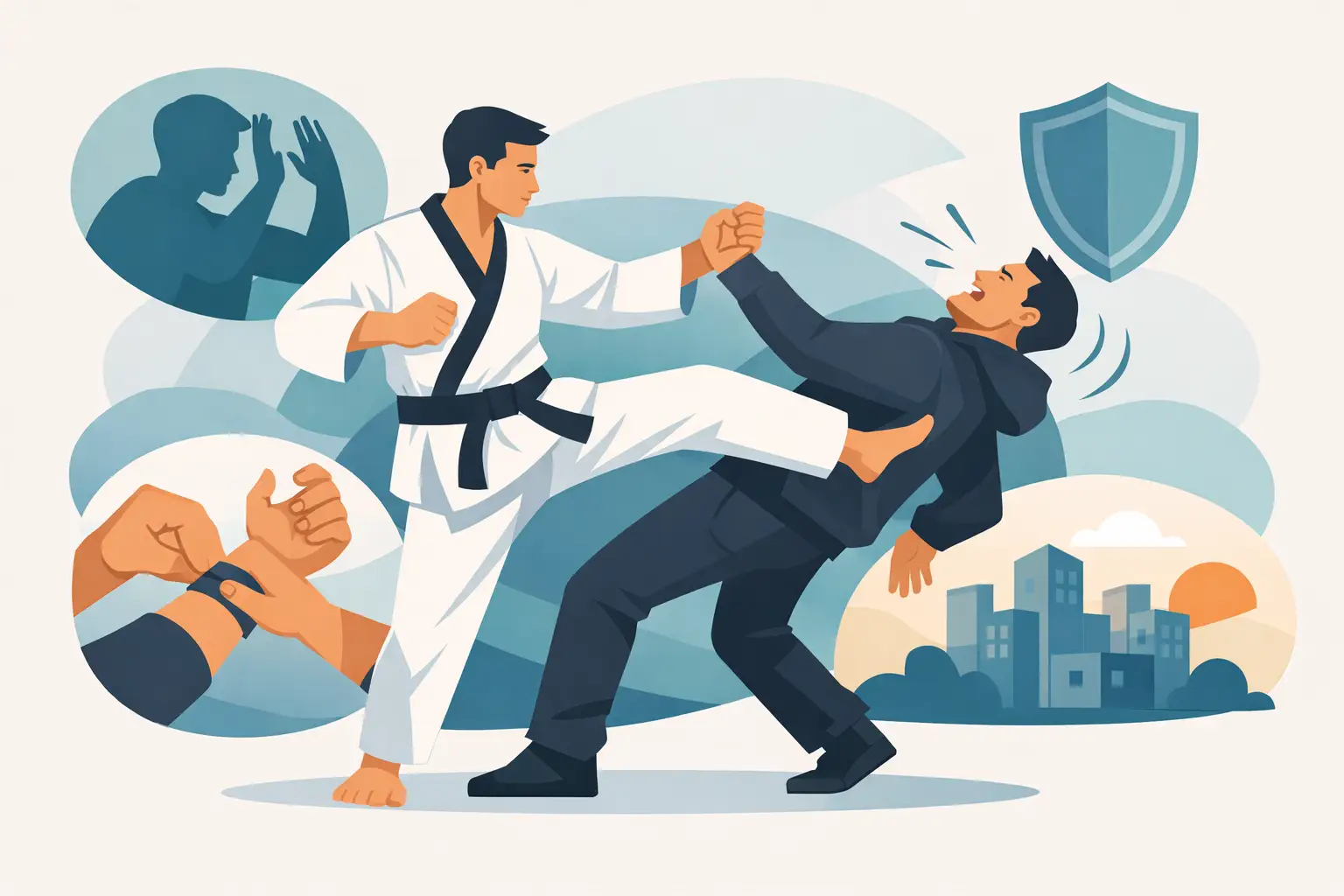
Practical self-defense training teaches students how to handle real pressure. They learn balance, movement, basic escapes, defensive reactions, and how to stay mentally present when stress rises. Even if they never need to use those skills in a serious way, knowing they have them changes how they feel.
That matters for children and teens, but it matters for adults too. A teenager heading into high school or preparing for college benefits from more than athletic ability. They need judgment, awareness, and the confidence to protect personal space and make smart choices. Adults dealing with workplace stress, public situations, or general anxiety often find that practical training helps them feel more grounded in everyday life.
At Inner-Power Martial Arts, that practical approach is part of what makes training meaningful for families. The goal is not to collect techniques for show. The goal is to build real-world confidence students can carry into school, social situations, and daily life.
Different ages need different support
A 5-year-old dealing with social pressure does not need the same instruction as a middle school student. That is why age-appropriate training matters so much.
Young children benefit most from structure, listening skills, body awareness, and simple confidence-building. At that stage, bullying prevention often starts with helping them speak up, follow directions, and feel secure around peers. They are learning how to take up space in a healthy way.
Elementary-age students are ready for more. They can begin learning assertive communication, practical boundaries, and controlled physical responses. This is also the stage where many kids struggle with peer pressure, exclusion, and confidence dips, so training can have a major impact.
Teens need another layer. They are navigating social status, online stress, stronger personalities, and more complex conflict. They need practical self-defense, but they also need emotional discipline and clear decision-making. A program that treats them with respect while challenging them can make a lasting difference.
What parents should look for in a program
If your goal is bullying prevention, the culture of the school matters as much as the curriculum. A loud, ego-driven environment may build intensity, but it will not necessarily build the kind of confidence most families want.
Look for instructors who talk about discipline, respect, control, and real-world self-defense. Watch how they correct students. Are they building kids up while holding them accountable? Do they understand that some students walk in nervous, embarrassed, or unsure of themselves?
It also helps to look for a school that values progress over intimidation. Children grow when they feel challenged and supported at the same time. Too soft, and they never build resilience. Too harsh, and they shut down. The right program finds the middle.
Parents should also pay attention to whether training addresses everyday life. Does the instruction connect martial arts skills to school confidence, focus, handling pressure, and personal safety? If not, the benefits may stay on the mat instead of carrying into the real world.
The goal is not just protection
Families often begin martial arts because they want their child to be safer. That is a strong reason to start. But the deeper value is what happens next.
A child who once felt powerless begins to trust themselves. A teen who struggled with pressure learns to stay steady. An adult who always felt physically unsure develops real confidence. The result is not just better defense against bullying. It is a stronger sense of identity.
That kind of growth changes more than one situation at school or one difficult season. It can shape how a person handles stress, relationships, setbacks, and challenges for years to come.
If you are thinking about martial arts because your child seems withdrawn, worried, or affected by social pressure, trust that instinct. The right training cannot remove every obstacle, but it can help them stand taller, speak stronger, and move through life with more confidence than they thought possible.
Sometimes the most important part of self-defense is not learning how to fight. It is learning, deep down, that you do not have to feel helpless.